Skip to content
Calls answered 24/7Office Mon–Fri 8am–5pm
6717 4th Ave, Brooklyn, NY 11220718-439-1224
Commercial Laundry SolutionsNew York · Since 2001

Electrical troubleshooting

Commercial washer & dryer troubleshooting

Factory-trained technicians who read electrical schematics, follow the voltage with a meter and find the part that actually failed.

How we troubleshoot

Measure first, then replace

Modern washers and dryers are run by control boards, inverters, sensors and safety switches wired in series. When one of them fails, the machine often shows a vague code or simply stops. Replacing parts until it works is slow and expensive. CLS technicians are factory-trained to read the manufacturer's electrical schematic for the exact machine, follow the circuit with a meter and pinpoint the failed component on the first visit whenever possible.

  1. Confirm the complaintReproduce the problem and note the fault code, the step of the cycle and anything the attendant saw.
  2. Pull the right schematicWiring changes between models and serial ranges, so we work from the diagram for that exact machine.
  3. Follow the voltageTrace the circuit from the power supply through each switch, relay and sensor. Voltage stops at the open part.
  4. Prove it with a meterVoltage checks with the circuit live, then continuity and resistance checks with the power disconnected.
  5. Fix the cause and verifyRepair or replace the failed part, look for what caused it, and run a full cycle before we leave.
Reading schematics

The wiring diagram is the map

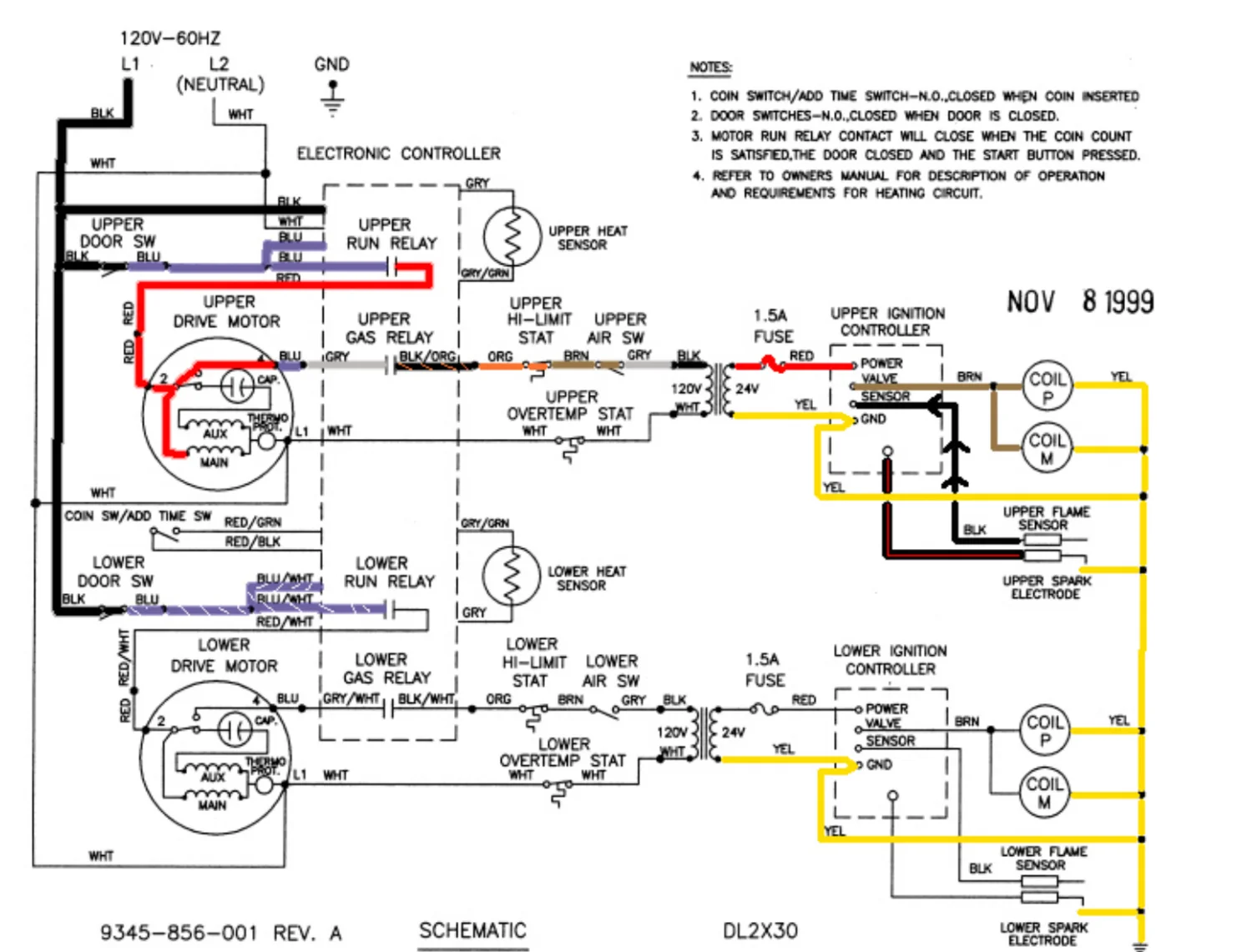
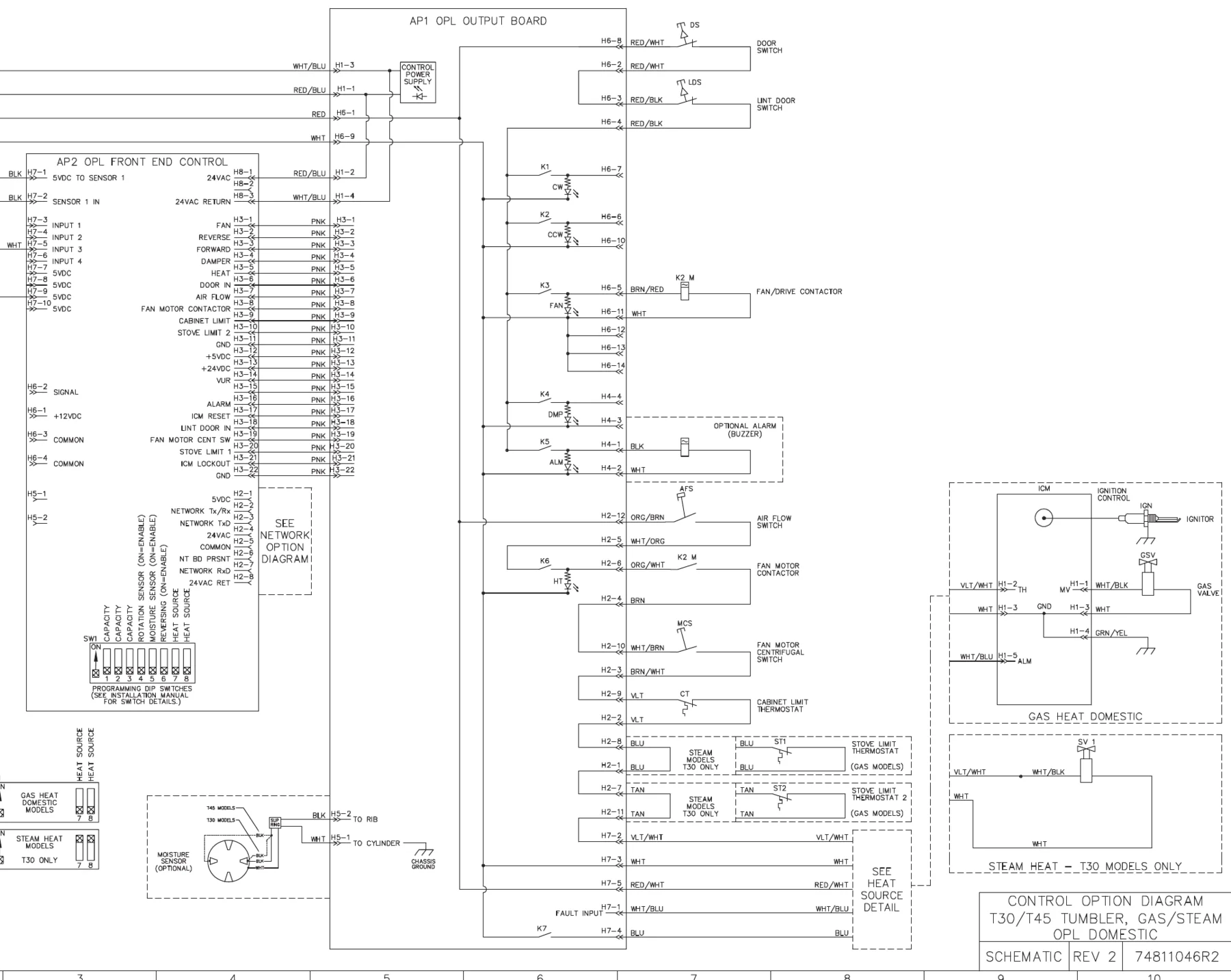
Every commercial machine ships with a schematic showing how power moves through it. Our technicians read these diagrams daily: ladder diagrams on older dryers, control and output board diagrams on current tumblers, and motor control power buses on front-load washer-extractors. Below are examples of the factory diagrams we work from, shown for illustration. Click any diagram to open it full size.

Stack dryer wiring schematic with the heat circuit traced in color from the power supply to the burner
Following the voltage on a stack dryerFactory schematic of a Dexter DL2X30 stack dryer with the heat circuit traced in color. When any switch in the path is open, voltage stops there, and that is where the meter tells us to look.
Commercial tumbler control diagram showing output board, door switch, airflow switch, limit thermostats and ignition control
Control diagram of a commercial tumblerFactory control diagram for an Alliance T30/T45 gas tumbler: the output board, door and lint door switches, airflow and centrifugal switches, limit thermostats, ignition control and gas valve.
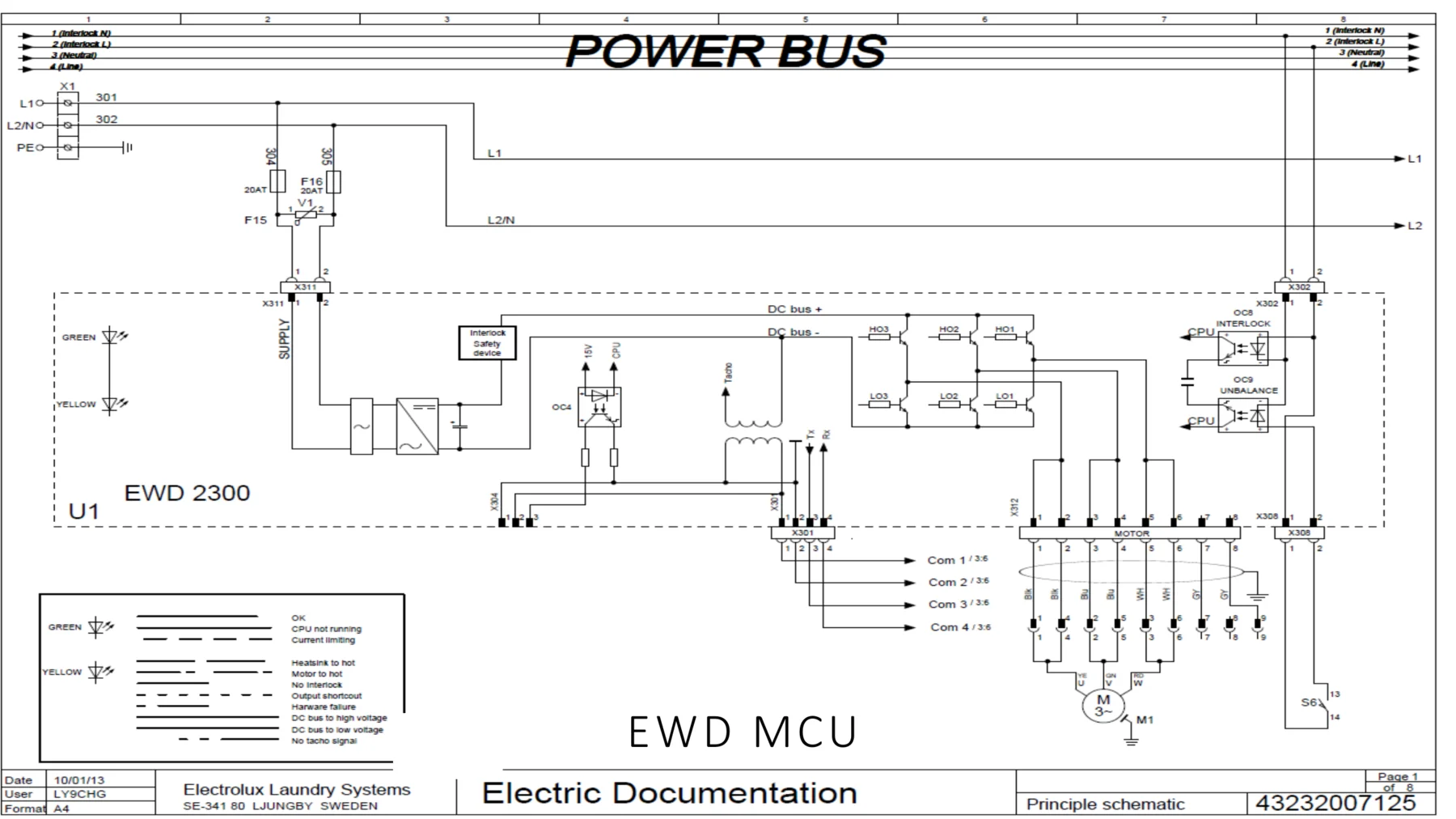
Front-load washer motor control power bus schematic with incoming line, DC bus and motor outputs
Motor control power bus on a washer-extractorFactory power bus diagram for an Electrolux washer motor control: incoming line and fuses, rectifier and DC bus, motor outputs and door interlock circuit.

Schematics on this page are manufacturer documentation reproduced for illustration only. Always use the diagram for your exact model and serial number.

Example: dryer runs but will not heat

Following the heat circuit

On a typical gas dryer the call for heat has to pass through a chain of switches before the burner lights. Each one is a safety: no door, no motor, no airflow or too much heat and the circuit stays open. Our technicians check them in order.

  1. Power inLine voltage at the terminal block
  2. Door switchCloses when the door is shut
  3. Start / run relayControl energizes the motor
  4. Motor runningCentrifugal switch closes at speed
  5. Heat relayControl calls for heat
  6. High-limit thermostatOpens if the cabinet overheats
  7. Airflow switchProves the blower is moving air
  8. Ignition controlSparks or heats the igniter
  9. Gas valveOpens on the ignition control's signal
  10. Flame sensingKeeps the valve open once lit
Dryer runs but will not heat: CLS troubleshooting flowIs the drum turning andthe blower moving air?NoFix the drive first: motor,belt, centrifugal switchYesIs the display clear ofany fault code?NoStart from the code: look itup in our error code libraryYesDoes voltage reach theignition control input?NoTrace back along the heat circuit:heat relay, airflow switch, limitsYesDoes the igniter sparkor glow on a call for heat?NoCheck igniter, ignitioncontrol and its wiringYesDoes the gas valve getvoltage and open?NoMeasure valve coil resistance;check the control outputYesFlame lights, then drops out: check the flame sensor, gas pressureand burner ground before replacing the ignition control.

Simplified CLS troubleshooting flow. The exact order of parts varies by brand and model, so we always confirm against the machine's own schematic.

Example: washer door will not lock

Door lock and interlock faults

On front-load washer-extractors the door lock is part of a safety interlock. The control will only lock the door when the door-closed switch confirms the door is shut, and will only unlock it after it confirms there is no water in the drum and the drum has stopped. A single bad switch, a lock that is not getting its signal, or a sensor reporting the wrong level can each stop the machine with a door code.

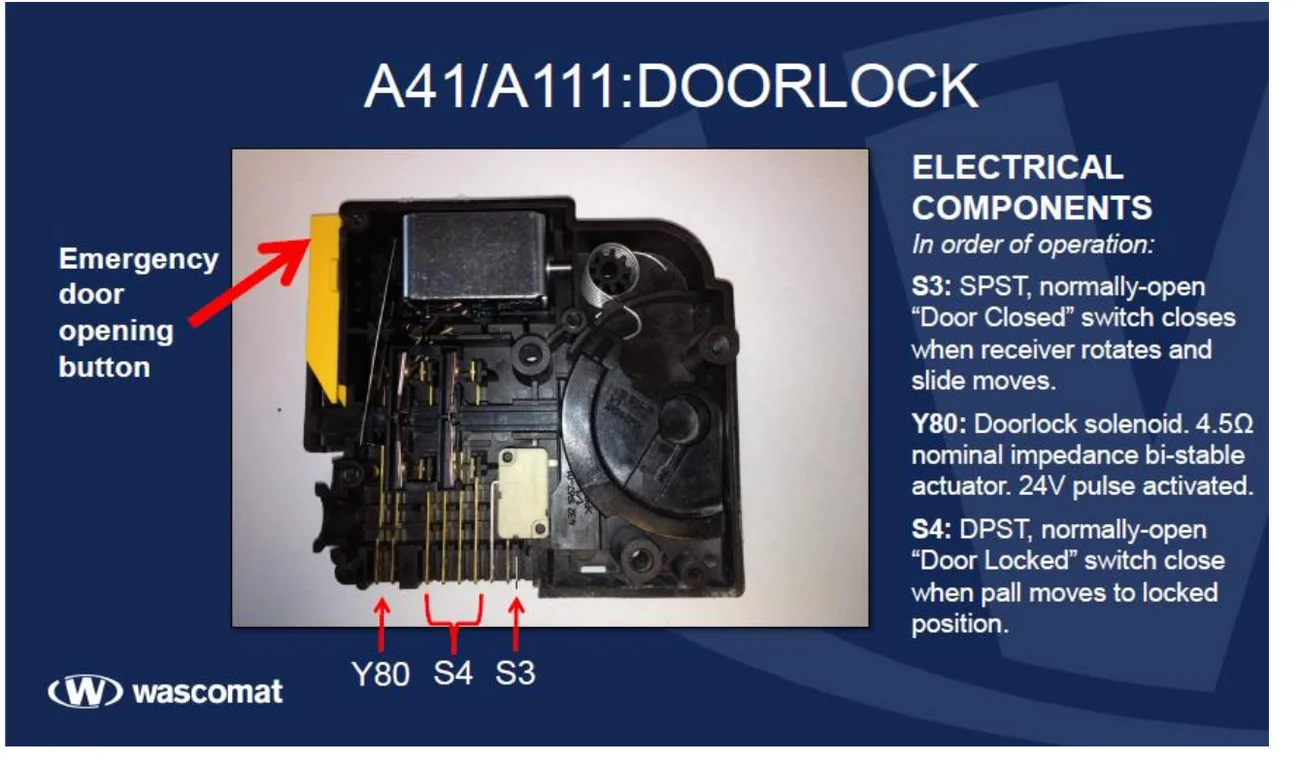
Washer door lock assembly with emergency release, lock solenoid and door switches labeled
Door lock assembly componentsElectrolux / Wascomat training material showing the emergency release, the lock solenoid and the door-closed and door-locked switches.
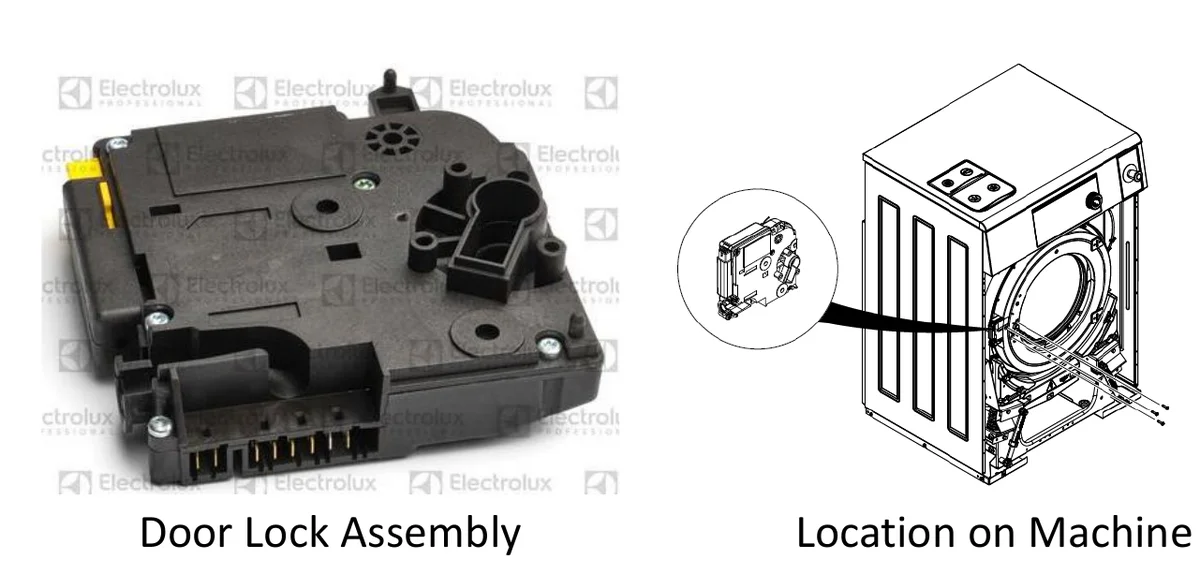
Washer door lock assembly and its location behind the front panel
Where the lock sits on the machineElectrolux training material.
Front-load washer door will not lock or start: CLS troubleshooting flowIs the door-closed switchreading closed?NoCheck door alignment, latchand the door-closed switchYesDoes the lock get apulse from the control?NoCheck the control outputand wiring to the lockYesIs the lock coil resistancewithin spec?NoReplace the door lockassemblyYesDoes the door-lockedswitch close?NoLock is jammed or the switchfailed: replace the lockYesLock checks out but the cycle still will not start: check the level sensor and drumrotation signals. The control will not lock or unlock until both are confirmed.

Simplified CLS troubleshooting flow written for owners and managers. Door interlock repairs should only be done by a qualified technician.

Example: water and drain errors

Fill, level and drain faults

Fill, level and drain codes come from a small group of parts: the water valves, the level (pressure) sensor and its hose, the drain valve or pump, and the input/output board that drives them. A "max time drain" code, for example, means the control did not see the water level drop in time. The cause can be a blocked drain, a drain valve that is not opening, a clogged sensor hose or a board output that is not switching. We check each with a meter before ordering parts.

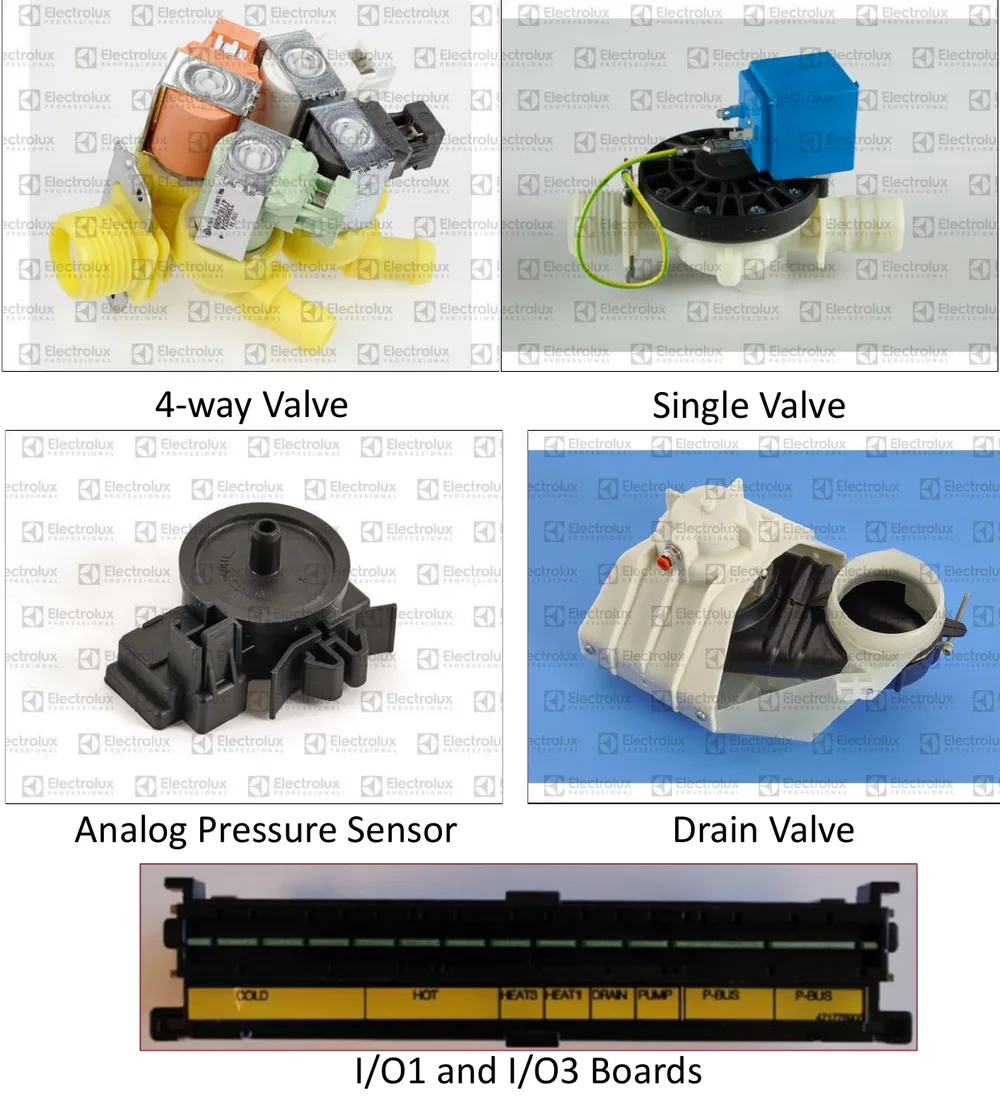
Washer water valves, analog pressure sensor, drain valve and input/output board
Water and drain componentsElectrolux training material: 4-way and single water valves, analog pressure sensor, drain valve and the I/O board.
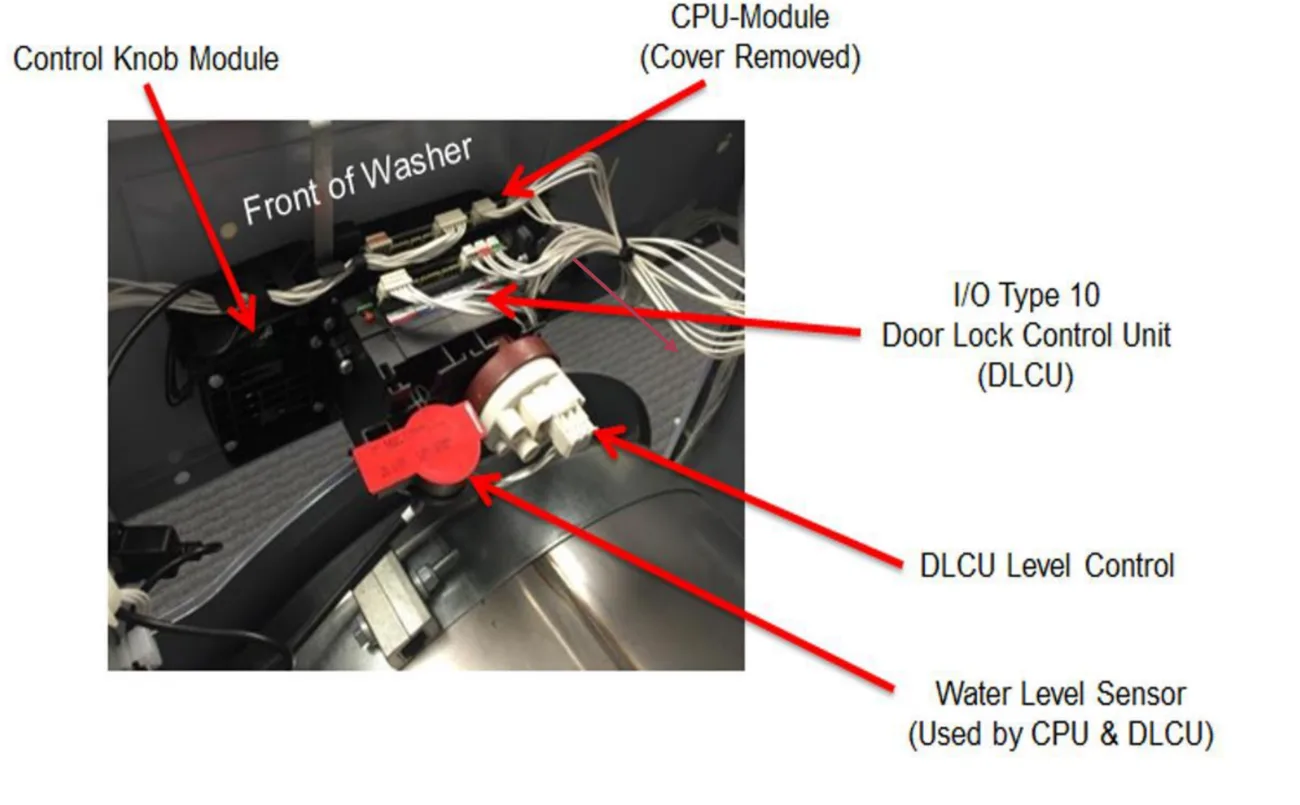
Inside the front of a washer showing the CPU module, door lock control unit and water level sensor
Control modules behind the front panelElectrolux training material showing the CPU module, door lock control unit and water level sensor.

Example: motor and inverter faults

Motor control and communication errors

On inverter-driven washers the main control talks to a separate motor control board. A "no motor communication" code means the main control sent a command and got no reply. Before replacing an expensive inverter, our technicians check the communication cable, the supply voltage at the motor control input, the fuses and the supply wiring. Overheating and low-voltage codes are traced the same way: measure, compare with the diagram, then repair.

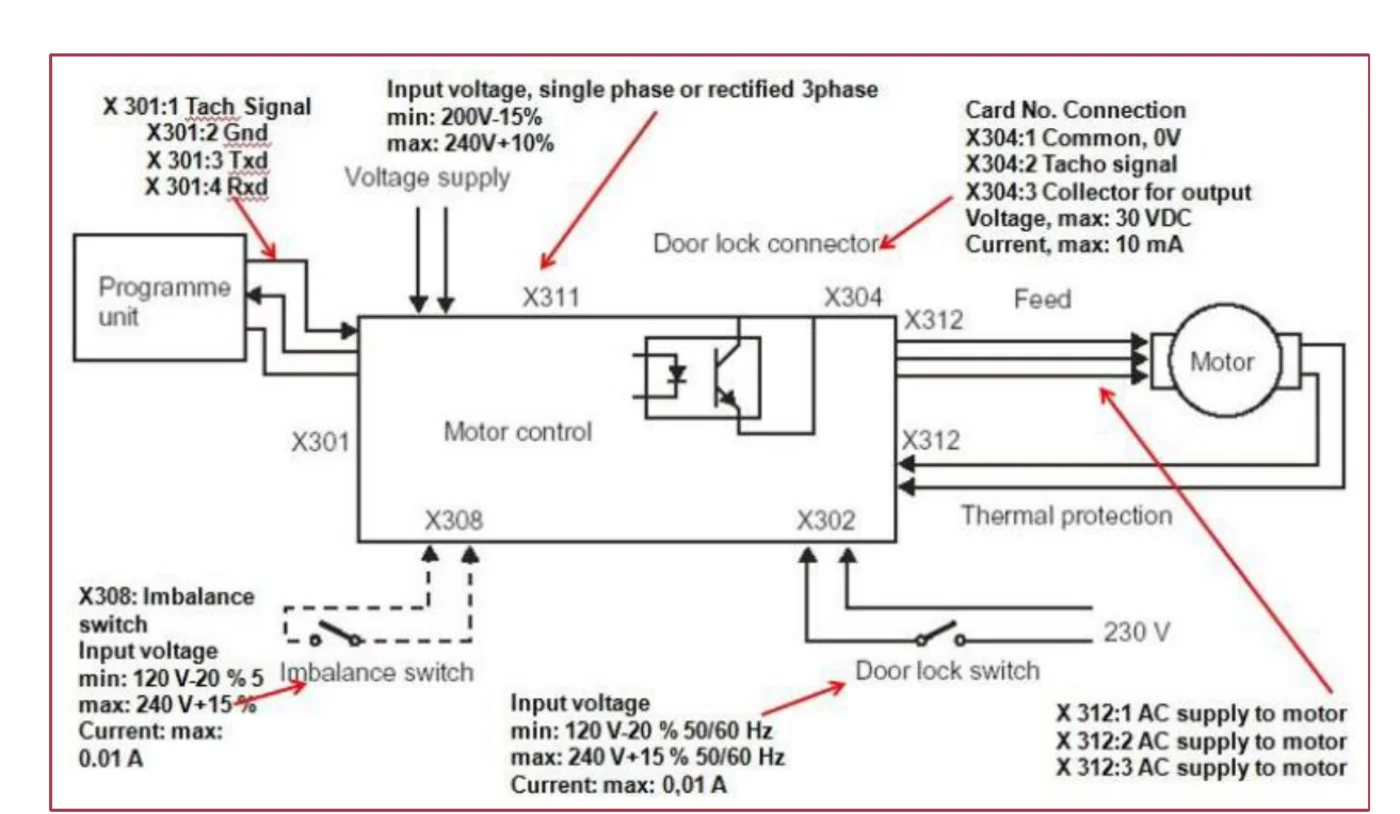
Block diagram of a washer motor control showing supply, communication, door lock, imbalance switch and motor connections
Motor control connectionsElectrolux training material: voltage supply, communication from the program unit, door lock and imbalance switch inputs, and motor outputs.
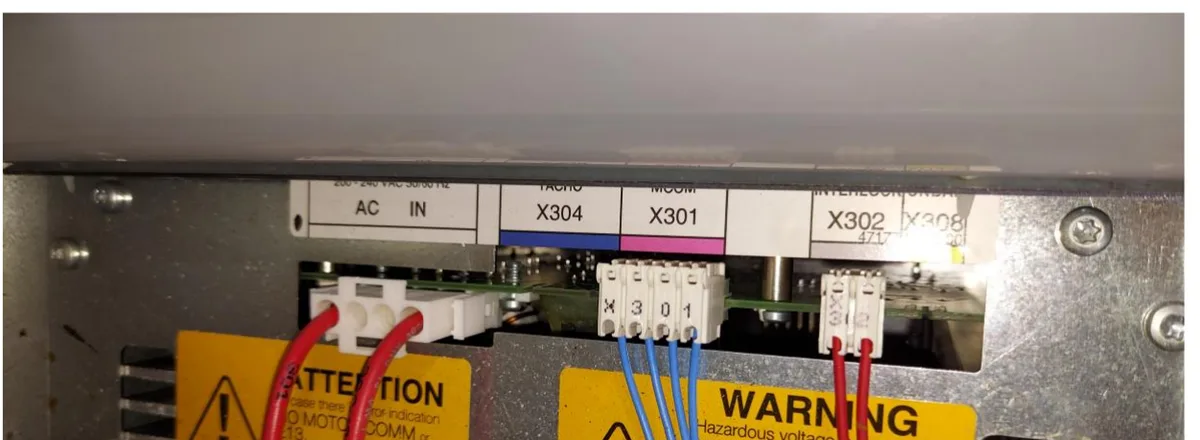
Washer motor control unit terminal connectors with warning labels
Motor control terminals on the machineElectrolux training material showing the AC input and connector terminals on the motor control.

Have a code on the display? Look it up in our error code library, including Wascomat and Electrolux, Speed Queen, Huebsch and UniMac, Dexter, Continental Girbau, IPSO and Maytag. Boards and inverters can often be repaired in our Brooklyn shop.

FAQ

Troubleshooting questions

Are CLS technicians trained to read wiring schematics?

Yes. CLS technicians are factory-trained on the brands we work with and read electrical schematics, ladder diagrams and wiring diagrams on every electrical call. Following the circuit on the diagram with a meter lets us pinpoint the failed switch, wire, relay or board instead of guessing and swapping parts.

Why does my commercial dryer run but not heat?

Usually something in the heat circuit is open: a tripped high-limit thermostat, an airflow switch that is not closing because of lint or a blocked exhaust, a failed centrifugal switch, an ignition control or igniter fault, or gas valve coils that have opened up. We follow the voltage through each part in order until we find where it stops.

Why won't my front-load washer door lock?

The door-closed switch may not be closing, the lock may not be getting its signal from the control, the lock coil or locked switch may have failed, or the control may not be confirming that there is no water and no drum rotation. Each of these can be checked with a meter against the wiring diagram.

What does a 'no motor communication' error mean on a washer?

The main control sent a command to the motor control board (inverter) and did not get a reply. Common causes are a damaged communication cable, no supply voltage to the motor control, a blown fuse or broken wire in the supply harness, or a failed motor control. We check supply voltage and wiring first so a good board is not replaced.

Do you troubleshoot older washers and dryers?

Yes. We service older machines with timers, relay logic and early electronic controls as well as current models, and keep factory schematics on file for the brands we work with.

Can you repair control boards and inverters instead of replacing them?

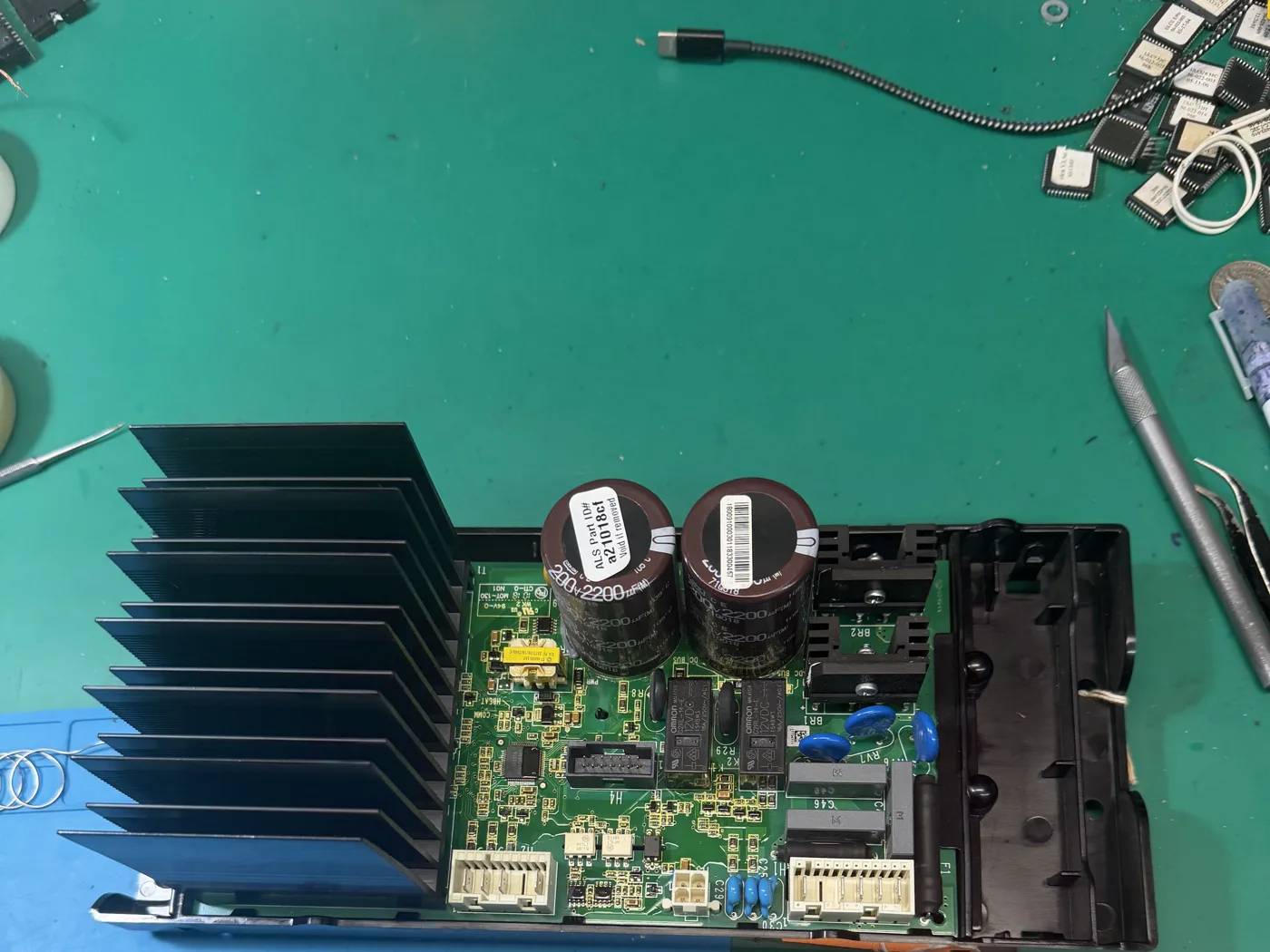
Often, yes. Our Brooklyn shop diagnoses and repairs control boards, door locks, inverters and motor controls. When a repair is not practical we tell you before ordering a replacement.

This page is general guidance written by CLS. Disconnect power, gas and steam before opening any panel, and leave live-voltage testing to a qualified technician.

Machine down with a code you can't clear?

Calls answered 24/7. Tell us the brand, model and the code on the display and we'll send a technician who knows the machine.